Why Trek In Nepal?
The Himalaya, the "abode of snows", extends from Assam in eastern India west to Afghanistan. It is a chain of the highest and youngest mountains on earth and it encompasses a region of deep religious and cultural traditions and an amazing diversity of people. A trek in Nepal is a special and rewarding mountain holiday.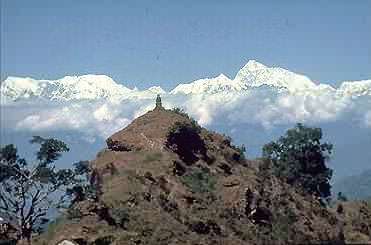 Just as New York is not representative of the USA, so Kathmandu is not representative of Nepal. If you have the time and energy to trek, don't miss the opportunity to leave Kathmandu and see the spectacular beauty and the unique culture of Nepal. Fortunately for the visitor, there are still only a few roads extending deeply into the hills, so the only way to truly visit the remote regions of the kingdom is in the slowest and most intimate manner - walking. It requires more time and effort, but the rewards are also greater. Instead of zipping down a freeway, racing to the next "point of interest," each step provides new and intriguing viewpoints. You will perceive your day as an entity rather than a few highlights strung together by a ribbon of concrete. For the romanticist, each step follows the footsteps of Hillary, Tenzing, Herzog and other Himalayan explorers. If you have neither the patience nor the physical stamina to visit the hills of Nepal on foot, a helicopter flight provides an expensive and unsatisfactory substitute.
Trekking in Nepal will take you through a country that has captured the imagination of mountaineers and explorers for more than 100 years. You will meet people in remote mountain villages whose lifestyle has not changed in generations. Most people trust foreigners. Nepal is one of only a handful of countries that has never been ruled by a foreign power.
Many of the values associated with a hiking trip at home do not have the same importance during a trek in Nepal. Isolation is traditionally a crucial element of any wilderness experience but in Nepal it is impossible to get completely away from people, except for short times or at extremely high elevations. Environmental concerns must include the effects of conservation measures on rural people and the economic effects of tourism on indigenous populations. Even traditional national park management must be adapted because there are significant population centres within Sagarmatha (Mt Everest) and Langtang national parks.
Trekking does not mean mountain climbing. While the ascent of a Himalayan peak may be an attraction for some, you need not have such a goal to enjoy a trek. As far as most people are concerned, trekking always refers to walking on trails.
While trekking you will see the great diversity of Nepal. Villages embrace many ethnic groups and cultures. The terrain changes from tropical jungle to high glaciated peaks in only 150 km. From the start, the towering peaks of the Himalaya provide one of the highlights of a trek. As your plane approaches Kathmandu these peaks appear to be small clouds on the horizon. The mountains become more definable and seem to reach impossible heights as you get closer and finally land at Kathmandu's Tribhuvan Airport.
During a trek, the Himalaya disappears behind Nepal's continual hills, but dominates the northern skyline at each pass. Annapurna, Manaslu, Langtang, Gauri Shankar and Everest will become familiar names. Finally, after weeks of walking, you will arrive at the foot of the mountains themselves - astonishing heights from which gigantic avalanches tumble earthwards in apparent slow motion, dwarfed by their surroundings. Your conception of the Himalaya alters as you turn from peaks famed only for their height to gaze on far more picturesque summits that you may never have heard of - Kantega, Ama Dablam, Machhapuchhare and Kumbhakarna.
What Is a Trek?
- A Trek is Not a Climbing Trip
- Whether you begin your trek at a roadhead or fly into a remote mountain airstrip, a large part of it will be in the Middle Hills region at elevations between 500 and 3000 metres. In this region, there are always well-developed trails through villages and across mountain passes. Even at high altitudes there are intermittent settlements used during summer by shepherds, so the trails, though often indistinct, are always there. You can easily travel on any trail without the aid of ropes or mountaineering skills. There are rare occasions when there is snow on the trail, and on some high passes it might be necessary to place a safety line for your companions or porters if there is deep snow. Still, alpine techniques are almost never used on a traditional trek. Anyone who has walked extensively in the mountains has all the skills necessary for an extended trek in Nepal.Though some treks venture near glaciers, and even cross the foot of them, most treks do not allow the fulfilment of any Himalayan mountaineering ambitions. Nepal's mountaineering regulations allow trekkers to climb 18 specified peaks with a minimum of formality, but you must still make a few advance arrangements for such climbs. Many agents offer so-called climbing treks which include the ascent of one of these peaks as a feature of the trek. There are a few peaks that, under ideal conditions, are within the resources of individual trekkers. A climb can be arranged in Kathmandu if conditions are right, but a climb of one of the more difficult peaks should be planned well in advance.
- A Trek Requires Physical Effort
- A trek is physically demanding because of its length and the almost unbelievable changes in elevation. During the 300-km trek from Jiri to Everest base camp and return, for example, the trail gains and loses more than 9000 metres of elevation during many steep ascents and descents. On most treks, the daily gain is less than 800 metres in about 15 km, though ascents of as much as 1200 metres are possible on some days. You can always take plenty of time during the day to cover this distance, so the physical exertion, though quite strenuous at times, is not sustained. You also can stop frequently and take plenty of time for rest.Probably the only physical problem that may make a trek impossible is a history of knee problems on descents. In Nepal the descents are long, steep and unrelenting. There is hardly a level stretch of trail in the entire country. If you are an experienced walker and often hike 15 km a day with a pack, a trek should prove no difficulty. You will be pleasantly surprised at how easy the hiking can be if you only carry a light backpack and do not have to worry about meal preparation. Previous experience in hiking and living outdoors is, however, helpful as you make plans for your trek. The first night of a month-long trip is too late to discover that you do not like to sleep in a sleeping bag. Mountaineering experience is not necessary, but you must enjoy walking.
Trekking in Nepal
 Nepal offers excellent trekking options to visitors. It is a unique destination for trekking as it offers the unbeatable combination of natural beauty and cultural diversities from the easy walking excursions to the strenuous climb of the snowy peaks. The most rewarding way to experience Nepal's natural embellishment and cultural assortment is to walk through the length, breadth and the altitudes of the country. You can trek up to the foot of the great Himalayan ranges, such as Mt. Everest, Langtang and Annapurna or make a circuit of the highest mountains. You can also get beyond the mountains in Tibet -- like arid landscape with ancient culture such as upper Dolpa and Mustang. This is why trekking in Nepal is considered as a big part of the ultimate Himalayan adventure and is a trekker's paradise. Nepal is gateway to the adventure in Tibet and Bhutan. Adventure Silk Road with its professionally managed operations based in Nepal offers the excellent experiences for the trekkers in Nepal. Come, Join Us on any of our trekking adventures in the Himalayan destinations! We are operating following Trekking and Climbing in Nepal Himalaya. Langtang Gosainkunda Helambhu Trekking, Helambhu Trekking Nepal, Langtang Gosaikunda Trekking Nepal, Helambu Gosainkunda Trekking Nepal, Everest Classic Trekking Nepal, Everest Base Camp Trekking Nepal, Everest Kalapattar Trekking Nepal, Gokyo & Everest Base Camp Trekking, Everest Yeiland Trekking Nepal, Kanchanjunga Trekking Nepal, Lower Dolpa Trekking Nepal, Rolwaling Trekking Nepal, Jumla Rara Trekking Nepal, Dolpa Trekking & Expedition Nepal, Manasalu Trekking Expedition Nepal, Ganesh Himal Trekking Nepal, Panchpokhari Trekking Nepal, Gorkha Pokhara Trekking Nepal, Dhaulagiri Round Trekking Nepal, Arun Valley Makalu Trekking Nepal, Lo-Manthang Trekking Nepal, Ganesh Himal Trekking Nepal, Upper Dolpo - Jomsom Trekking Nepal, Upper Mustang Trekking Nepal, Jomsom Muktinath Trekking Nepal, Annapurna Sanctuary Trekking, Ghorepani Poon Hill Trekking Nepal, Ghandrung Trekking Nepal, Jomsom Trekking Nepal, Siklish Trekking Nepal,Panchase Trekking Nepal, Annapurna Circuit Trekking Nepal, Annapurna Round & Base Camp Trekking, Muktinath Trekking Nepal, Annapurna Base Camp Trekking Nepal,Helambhu Trekking Nepal, Gosainkunda Trekking Nepal, Ghandruk Trekking Nepal, Royal Trekking Nepal, Pokhara Valley Trekking Nepal, Shivapuri Trekking Nepal & Instant Everest Trekking Nepal.
 - Some Famous Trekking Place In Nepal
Gokyo & Everest Base Camp Trekking - 21 Days
 This trek is a combination of the Gokyo Lake and the Everest Base Camp. A visit to Gokyo Ri offers magnificent view of Cho Oyu, Everest, Lhotse, Nuptse and Amadablam. We then cross over the Cho Lo pass and visit the Everest Base Camp. This trek also offers a walk through th emost dramatic landscape and magnificent views of the mountain range in the region.
 With eight of the worlds ten highest peaks, Nepal is loaded with spectacular mountains vistas. Everest trek in justifiably famous, not only for its proximity to the world's highest mountain (8848m) but also for its friendly Sherpa people, picturesque villages great variety of cultures and traditions, colorful festivals and monasteries. The flora and fauna are other ornaments of the Sagarmatha National Park. The story of the yeti is still a mystery to the world from the Kahumbu region.
Everest Base Camp trek has everything: the incredible mountain views from Chukung, Kala Pattar and Gokyo Ri. Popularly known as "The Ultimate Trek," it includes all that the Khumbu has to offer including the fascinating villages and Tibetan Buddhist monasteries and the culture and hospitality of the Sherpa people, who will surely win your hearts. After starting with a flight to Lukla (2,805m/9,200ft) we trek up to Kala Pattar view point (5,550m/18,200ft) trek up the Khumbu Glacier to Everest Base camp set under the awesome Khumbu Icefall. Then we veer off the main trail to cross the Cho La pass (5,422m/17,783ft) into the Gokyo Valley. To top off this unique trek we climb Gokyo Ri (5,488m/18,000ft) for a panoramic view of the greatest mountain scenery in the world - including five 8000+m/26,000+ft giants and myriad other peaks of the Khumbu Himal.
- Everest Yeiland Trekking Nepal - 15 Days
 With eight of the world’s ten highest peaks, Nepal is loaded with spectacular mountains vistas. Everest trek in justifiably famous, not only for its proximity to the world's highest mountain (8848m) but also for its friendly Sherpa people, picturesque villages great variety of cultures and traditions, colorful festivals and monasteries. The flora and fauna are other ornaments of the Sagarmatha National Park. The story of the yeti is still a mystery to the world from the Kahumbu region. It will give us enormous pleasure to introduce you to an astounding view of the world's highest peak. Perhaps in viewing Everest in this way, you will be fulfilling a long held desire. Certainly you will never be quite the same again. Ever since the days of early climbing expeditions, this 8,848m mountain has had a lure of its own, drawing climbers to scale it and trekkers to gaze on its icy faces. It easy to see why the trek to the base camp of Mount Everest has become one of the most popular routes in Nepal.
We start our trek from Lukla after a 30 minute flight from Kathmandu. When we land at that tiny airstrip, the adventure really begins. During trekking, we spend several days moving through the homelands of the Sherpa people, and will see Buddhist monasteries and close up views of Mt. Everest and neighboring Ama Dablam, considered by many to be among the most beautiful mountains in Nepal. We spend 2 nights at Namche Bazaar, the bustling market town in the heart of Sherpa country, and at Pheriche see a cluster of houses set among the high summer grazing pastures of the region. We spend the time in Namche Bazaar exploring and acclimatizing, which is an important factor in your enjoyment of the trek.
People who have fully acclimatized may trek to the Everest Base Camp but without doubt, for many people the main highlight will be the magnificent views which unfold from the summit of Kalapathar - the extradinary ice sculptures of the Khumbu Glacier, Nuptse and the south-west face of Everest itself.
With eight of the world’s ten highest peaks, Nepal is loaded with spectacular mountains vistas. Everest trek in justifiably famous, not only for its proximity to the world's highest mountain (8848m) but also for its friendly Sherpa people, picturesque villages great variety of cultures and traditions, colorful festivals and monasteries. The flora and fauna are other ornaments of the Sagarmatha National Park. The story of the yeti is still a mystery to the world from the Kahumbu region. It will give us enormous pleasure to introduce you to an astounding view of the world's highest peak. Perhaps in viewing Everest in this way, you will be fulfilling a long held desire. Certainly you will never be quite the same again. Ever since the days of early climbing expeditions, this 8,848m mountain has had a lure of its own, drawing climbers to scale it and trekkers to gaze on its icy faces. It easy to see why the trek to the base camp of Mount Everest has become one of the most popular routes in Nepal.
We start our trek from Lukla after a 30 minute flight from Kathmandu. When we land at that tiny airstrip, the adventure really begins. During trekking, we spend several days moving through the homelands of the Sherpa people, and will see Buddhist monasteries and close up views of Mt. Everest and neighboring Ama Dablam, considered by many to be among the most beautiful mountains in Nepal. We spend 2 nights at Namche Bazaar, the bustling market town in the heart of Sherpa country, and at Pheriche see a cluster of houses set among the high summer grazing pastures of the region. We spend the time in Namche Bazaar exploring and acclimatizing, which is an important factor in your enjoyment of the trek.
People who have fully acclimatized may trek to the Everest Base Camp but without doubt, for many people the main highlight will be the magnificent views which unfold from the summit of Kalapathar - the extradinary ice sculptures of the Khumbu Glacier, Nuptse and the south-west face of Everest itself.
Shivapuri Trekking Nepal - 7 Days
 Few people trek around the Kathmandu valley. Yet it offers a rich insight into the lives, history, culture and religion, together with the daily toil in the fields of its inhabitants. The valley rim lies around 1000/ 2800 m and in the spring offers early flowering rhododendrons and through the autumn and winter, wonderful mountain vistas which can, from certain viewpoints, stretch from Everest in the east to Annapurna in the west.
 This trek begins at Budhamilkantha, with the option end at Nagarkot or Dhulikhel. At Budhanilkantha, you have the chance to see the ancient statue of Lord Vishnu sleeping on a bed of snakes. Spectacular panoramic views of snow capped Himalayan peaks and a magnificent view of the sunset and sunrise, with the magical change of color that they produce on the mountains, will be seen from the slopes of Shivapuri, the second highest hill in the Kathmandu Valley. The valley rim lies between 1800 and 2800m and in spring offers early flowering rhododendrons.
Pokhara Valley Trekking Nepal - 8 Days | |||||||||
 If Kathmandu is the cultural hub of Nepal, Pokhara is its center of adventure. An enchanting city nestled in a tranquil valley; it is the starting point for many of Nepal's most popular trekking and rafting destinations. The atmosphere on the shore of Phewa Lake is one of excited vitality as hipster backpackers crowd the many bars and restaurants exchanging recommendations on guest houses and viewpoints, both by the lake and above the clouds. Pokhara is a place of remarkable natural beauty. The serenity of Phewa Lake and the magnificence of the fishtailed summit of Machhapuchhre (6,977 m) rising behind it create an ambience of peace and magic. At an elevation lower than Kathmandu, it has a much more tropical feel to it, a fact well appreciated by the beautiful diversity of flowers which prosper in its environs. Indeed, the valley surrounding Pokhara is home to thick forests, gushing rivers, emerald lakes, and of course, the world famous views of the Himalaya. If Kathmandu is the cultural hub of Nepal, Pokhara is its center of adventure. An enchanting city nestled in a tranquil valley; it is the starting point for many of Nepal's most popular trekking and rafting destinations. The atmosphere on the shore of Phewa Lake is one of excited vitality as hipster backpackers crowd the many bars and restaurants exchanging recommendations on guest houses and viewpoints, both by the lake and above the clouds. Pokhara is a place of remarkable natural beauty. The serenity of Phewa Lake and the magnificence of the fishtailed summit of Machhapuchhre (6,977 m) rising behind it create an ambience of peace and magic. At an elevation lower than Kathmandu, it has a much more tropical feel to it, a fact well appreciated by the beautiful diversity of flowers which prosper in its environs. Indeed, the valley surrounding Pokhara is home to thick forests, gushing rivers, emerald lakes, and of course, the world famous views of the Himalaya.
| |||||||||
 |
 Dolpa is a most remote and least developed district in Nepal. Although a few anthropologists and geographers had explored the region, the entire district was closed to trekers until 1989 when the southern part of Dolpo was opened to organised trekking groups, Shey is still closed to foreigners. One story cites the reason for closure as the large-scale theft of statues from monasteries several years ago. It is possible to visit Tibetan-style “inner Dolpo” villages Tarap and at Phoksundo Lake, but most of the southern part of Dolpo is a region of Hindu influence.
  The best known of the many isolated high Himalayan valleys across northern Nepal, Dolpo preserves one of the last remnants of traditional Tibetan Culture. Surrounded by high mountains including the Dhaulagiri massif to the southeast and cut off by high passes closed by snow half the year, Dolpo is close to Tibet, where people emigrated from perhaps 1,000 years ago.
  Dolpo is located inside the Shy – Phoksundo National Park of mid–western Nepal, behind the Dhaulagiri massif, towards the Tibetan Plateau. Cut off by a series of very high passes, closed by snow most of the year, Dolpo remains a truly isolated corner of Nepal. Time has stood still here for centuries as the inhabitants of Tibetan stock continue to live, cultivate and trade the way they have done since time immemorial. The finally preserved Eco–system encompasses a wild and wonderful variety of plants and wildlife, including the blue sheep and leopard. A trek through Dolpo is an experience not easily forgotten.
  The most obvious group of people seen in the northern parts of the area. Particularly in Dopa, are of Tibetan origin. Similar to Tibetans and Sherpas they rely on eking out a living on the high pastures and supplementing this with trade both to the north and the south. For years, their salt caravans have been a common site along the mountain passes. Their religion is a mixture of Tibetan Bhddhisum and the ancient, pre Buddhist , Bon religion, a largely animistic faith. Strangely, their language is based on the Tibetan dialect spoken in Kham, a province of old Tibet located many hundreds of kilometers to the east.
  This is the most easily accessible of all areas from Kathmandu. It lies about 70k.m north of Kathmandu valley, is an area inhabited by sherpas. The language , culture and dress of the Helambu sherpas are very different from those of Solu khumbu sherpas. Gosaikunda is one of the hindu holy place and is considerd to be made by Lord Shiva. The Buddhist Tamang that live nearby also revere it as their holy place. Every August on full moon night lake is thronged with pilgrims for a big festival. On other days the lake sits in a tranquil atmosphere.